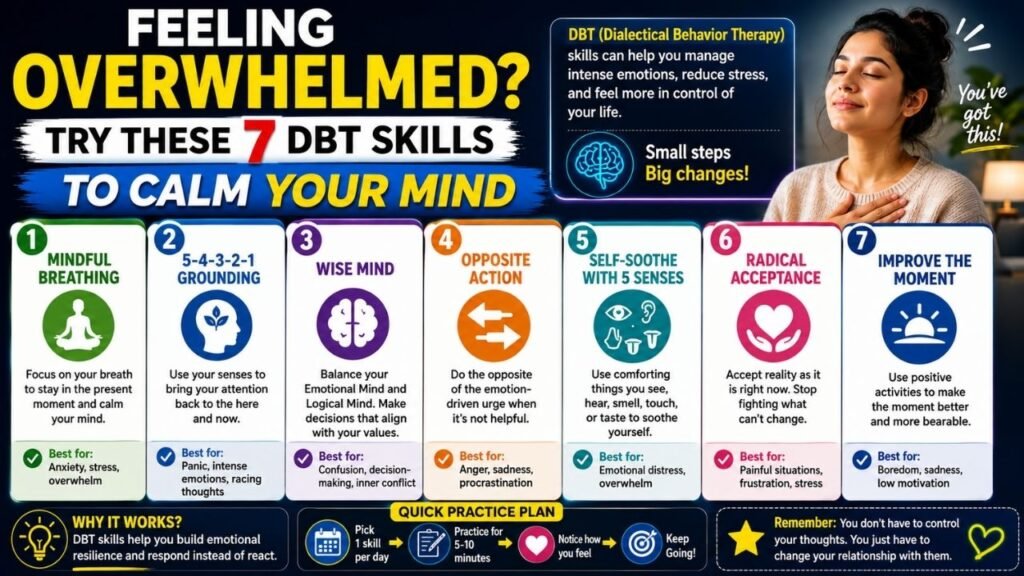
Feeling overwhelmed can make even simple things feel difficult. Your thoughts may move too fast, your body may feel tense, and you may not know what to deal with first.
DBT, or Dialectical Behavior Therapy, teaches practical skills that can help you handle strong emotions and stressful moments. These skills are not about forcing yourself to stop feeling. They are about slowing things down so you can respond in a calmer way.
1. Stop Before You React
When you feel overwhelmed, your first instinct may be to act quickly. You might send an angry text, walk away from an important conversation, or make a decision you later regret.
Instead, give yourself a short pause.
Take a step back from what is happening and give yourself a moment before you respond. Even a few quiet seconds can help you move from an emotional reaction to a more thoughtful response.
You can simply tell yourself, “Pause first. I can deal with this one step at a time.”
2. Slow Down Your Breathing
Stress can change the way you breathe. Your breathing may become faster or feel shallow, which can make you feel even more tense.
Try slowing your breathing down. Breathe in gently, then breathe out slowly. Keep your shoulders relaxed and avoid forcing your breath.
Continue for a few minutes and pay attention to the feeling of breathing rather than the stressful thoughts in your head.
The goal is not to make every difficult feeling disappear. It is to give your body a chance to settle.
3. Try the 5-4-3-2-1 Grounding Exercise
When your mind is racing, grounding can help bring your attention back to the present moment.
Look around and notice things you can see, hear, touch, smell, and taste. You can slowly name objects around you and pay attention to simple details.
For example, notice the chair under you, the sounds in the room, the temperature of the air, or the feeling of your feet on the floor.
This can give your mind something real and present to focus on instead of getting lost in stressful thoughts.
4. Check the Facts
When you are overwhelmed, your mind may quickly jump to the worst possible outcome.
DBT encourages you to check what you actually know.
Ask yourself: What happened? What do I know for sure? What am I assuming? Is there another possible explanation?
For example, if someone does not answer your message, you may think they are upset with you. But the only fact may be that they have not replied yet.
Looking at the facts can help stop your thoughts from getting bigger than the situation.
5. Use a Simple Self-Soothing Activity
Sometimes you cannot solve a stressful situation right away. In those moments, a small comforting activity can help you get through the next few minutes.
Use your senses to help yourself feel more comfortable. You might listen to calming music, take a warm shower, sit somewhere quiet, make a cup of tea, or spend a few minutes outside.
You are not running away from the problem. You are giving yourself time to calm down before deciding what to do next.
6. Try the TIPP Skill During Very Intense Stress
TIPP is a DBT distress-tolerance skill that focuses on the body’s physical response to intense emotions.
It includes changes in body temperature, short periods of physical activity, slower breathing, and relaxing your muscles.
For example, you might do a brief amount of safe movement and then slow your breathing while relaxing your shoulders and other tense muscles.
Choose activities that are safe for your body. If you have a health condition or physical limitation, ask a health professional which options are appropriate for you.
7. Focus on One Small Thing
When everything feels like too much, trying to solve everything at once can make you feel even more overwhelmed.
Instead, choose one small task.
You could drink some water, take a shower, answer one email, clean one small area, or write down the three things that need your attention most.
Finishing one small thing can make the situation feel more manageable. Once that is done, you can decide what comes next.
How to Use These Skills in Daily Life
You do not need to wait until you are extremely stressed to practice DBT skills.
Try practicing slow breathing or mindfulness when you already feel calm. That makes the skill easier to remember when a difficult moment arrives.
You can also keep a short list of the skills that work best for you. When you feel overwhelmed, you will not have to spend time trying to remember what to do.
When You Should Get Extra Help
DBT skills can be useful for everyday stress and difficult emotions, but sometimes extra support is needed.
If feeling overwhelmed is happening often or is making it hard to manage work, school, relationships, sleep, or daily activities, consider talking with a qualified mental health professional.
If you ever feel that you may hurt yourself or someone else, seek immediate help from emergency services or a crisis service in your area.
Feeling overwhelmed does not mean you are failing or that you cannot handle life. Sometimes your mind and body simply need a chance to slow down. The seven DBT skills above can help you pause, calm your body, understand what is happening, and take the next small step.
You do not have to use all seven. Start with one that feels easy and practice it regularly. Over time, having a few reliable skills ready can make difficult moments easier to handle.